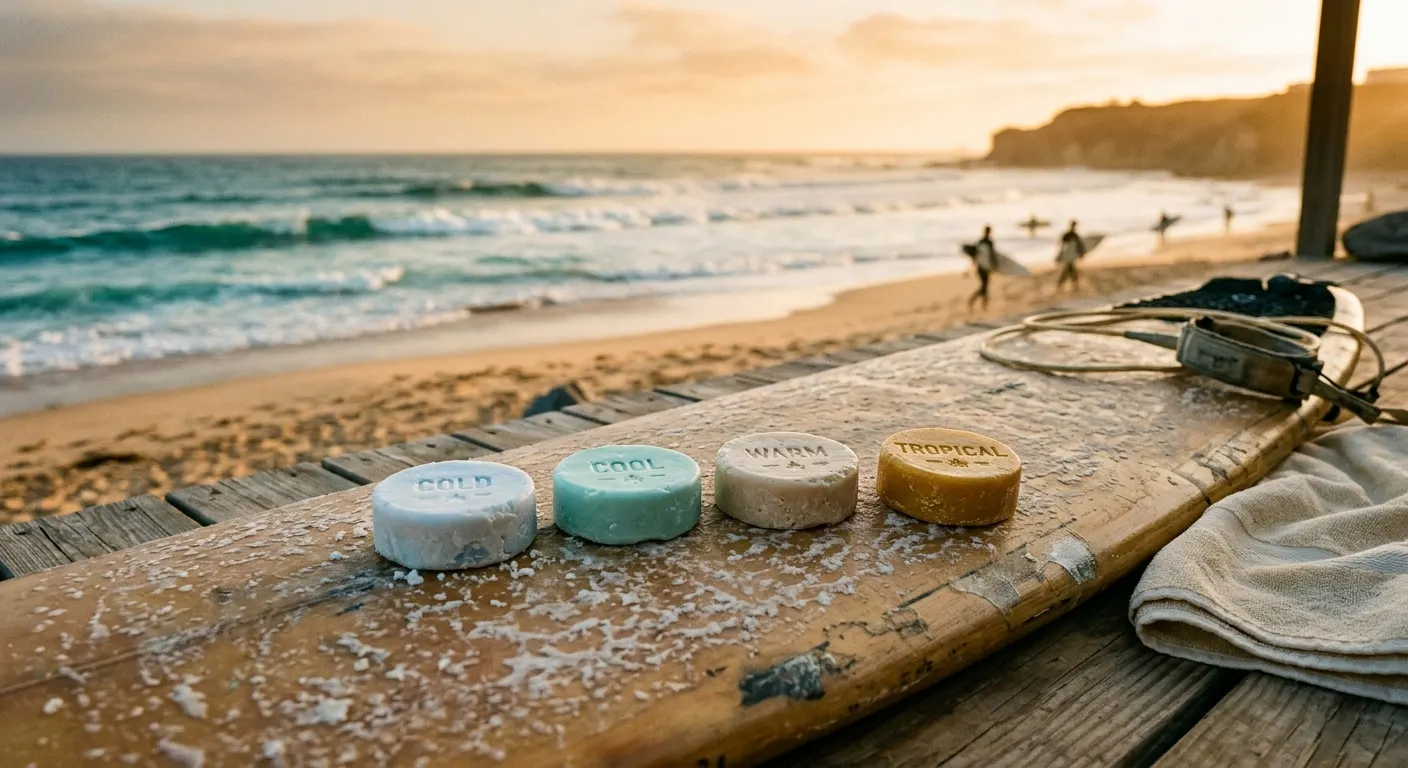
Surf Wax Temperature Guide: Pick the Right Formula
By Swellkin . 6 min read . Updated June 2026
Using warm-water wax in cold surf is a classic beginner mistake. The wax stays hard, does not form proper bumps, and your feet slide on what feels like a smooth plastic surface. Using cold-water wax in warm surf is the opposite problem: it melts, turns slippery, and collects sand. The fix is matching the wax formula to your water temperature, not the air temperature. Mr. Zog's Sex Wax Original (Tropical) is the default for warm water, and Mr. Zog's Sex Wax Original (Cool/Cold Water) is the version you need when the water drops below about 65 degrees Fahrenheit.
The short answer
Match wax to water temperature, not air temperature. Use tropical or warm wax in water above 70 degrees Fahrenheit, cool wax between 60 and 70 degrees, and cold wax below 60 degrees. Mr. Zog's Sex Wax is the proven default in every temperature range. Always apply a hard basecoat first on a clean board, then build a top coat in the temperature-correct formula.
This guide contains affiliate links. Swellkin may earn a commission at no cost to you.
Why temperature matching matters
Surf wax is a blend of paraffin, beeswax, and other ingredients formulated to achieve a specific hardness at a specific water temperature. Tropical formula wax is hard enough to hold its bumps in 75-plus-degree water without melting. Cold water formula wax is soft enough to build tacky knobs in 55-degree water where a harder wax would stay smooth and slippery.
Use the wrong one and you lose grip at the moment you need it most. In a cold-water break, hard tropical wax polishes smooth and your feet slide forward on takeoff. In warm water, cold formula wax melts into a sandy mess that is more lubricant than grip aid. The wax formulas exist precisely because one cannot do both jobs well.
The temperature ranges for each formula
Tropical formula: water above 75 degrees Fahrenheit. This applies to Hawaii, Indonesia, the Maldives, most of the Caribbean, and summer surf in warm-climate regions. Mr. Zog's Sex Wax Original (Tropical) is the standard here, and Sticky Bumps Original Surf Wax offers a tropical formula that many surfers prefer for its notably tacky initial grip.
Warm formula: water between about 68 and 75 degrees Fahrenheit. California summer, much of the Australian coast outside winter, and European summer breaks fall here. Both Sex Wax and Sticky Bumps make warm variants.
Cool formula: water between 60 and 68 degrees Fahrenheit. California autumn and early winter, UK summer, and many temperate breaks in late season. This is the range most versatile wax formulas cover.
Cold formula: water below 60 degrees Fahrenheit. Pacific Northwest, Ireland, Scotland, UK winter, and cold-water regions year-round. Mr. Zog's Sex Wax Original (Cool/Cold Water) is specifically designed to stay soft and grippy in this range. Using anything harder than cool formula here produces almost no grip.

Mr. Zog's Sex Wax Original (Tropical)
The world's best-known surf wax, used since 1972. The tropical formula builds firm, grippy knobs that stay put in warm water and resist melting in summer heat.

Sticky Bumps Original Surf Wax
Family-owned since 1972, Sticky Bumps provides a tackier initial stick than most competitors and comes in cold, cool, warm, and tropical formulas.
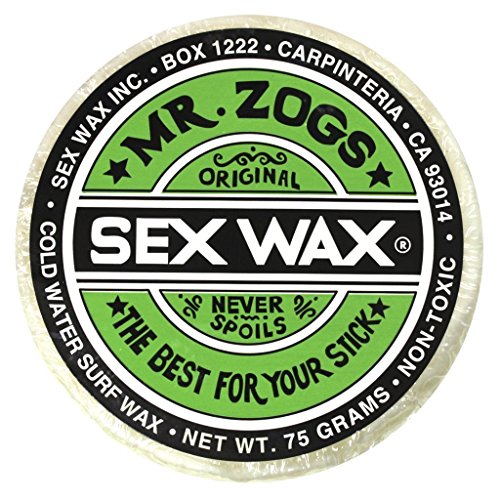
Mr. Zog's Sex Wax Original (Cool/Cold Water)
The cold-water formula of the most trusted surf wax in the world, specifically formulated to stay soft and grippy in water below 65 degrees Fahrenheit.
Basecoat first: the step most beginners skip
A hard basecoat wax applied to a clean board is the foundation that all top-coat wax builds on. Without it, the softer temperature-matched top coat slides around the smooth glass or epoxy surface and never forms proper bumps.
Apply basecoat in a cross-hatch diagonal pattern until you have a layer of small raised bumps across the standing area. Then apply the correct temperature top coat over that base. From this point forward, you only apply top coat to maintain grip. A good basecoat lasts a season; top coat is what you replenish between sessions.
Both Mr. Zog's Sex Wax Original (Tropical) and Sticky Bumps Original Surf Wax work as top coats over any standard basecoat wax. Some surfers use a harder bar, such as a tropical formula in cool water, as a makeshift basecoat when the right basecoat is not available.
Mr. Zog's Sex Wax Original (Tropical)
The world's best-known surf wax, used since 1972. The tropical formula builds firm, grippy knobs that stay put in warm water and resist melting in summer heat.
Sticky Bumps Original Surf Wax
Family-owned since 1972, Sticky Bumps provides a tackier initial stick than most competitors and comes in cold, cool, warm, and tropical formulas.
When a traction pad replaces wax on the back foot
Many shortboarders combine wax on the front foot area with a permanent traction pad on the tail. The pad gives a fixed grip reference point for the back foot that never needs reapplication, has a built-in tail kick for leverage on turns, and outlasts any wax job. You still need wax for the front foot zone.
The FCS Julian Wilson Traction Pad is the standard recommendation for shortboard performance surfing: grippy texture, a trapeze arch bar, and a high tail kick. The Dakine John John Florence Pro Traction Pad adds an eco angle with biodegradable EVA foam. If you prefer to feel the board beneath your foot rather than stand on thick foam, the Creatures of Leisure Proto 1.4 Traction Pad uses a 1mm ultra-thin base that preserves board feel while still providing reliable grip.

FCS Julian Wilson Traction Pad
Three-piece tail pad with a trapeze arch bar and high tail kick, designed with Julian Wilson for performance shortboarding across a wide range of conditions.

Dakine John John Florence Pro Traction Pad
Five-piece biodegradable EVA pad with a triple-cut positraction grid pattern, designed with John John Florence and backed by a two-year warranty.

Creatures of Leisure Proto 1.4 Traction Pad
Creatures' flagship traction pad with an intricate raised texture, a 1mm thin base for a board-feel connection, and proven durability.
Featured in this guide
Mr. Zog's Sex Wax Original (Tropical)
The world's best-known surf wax, used since 1972. The tropical formula builds firm, grippy knobs that stay put in warm water and resist melting in summer heat.
Mr. Zog's Sex Wax Original (Cool/Cold Water)
The cold-water formula of the most trusted surf wax in the world, specifically formulated to stay soft and grippy in water below 65 degrees Fahrenheit.
Sticky Bumps Original Surf Wax
Family-owned since 1972, Sticky Bumps provides a tackier initial stick than most competitors and comes in cold, cool, warm, and tropical formulas.
FCS Julian Wilson Traction Pad
Three-piece tail pad with a trapeze arch bar and high tail kick, designed with Julian Wilson for performance shortboarding across a wide range of conditions.
Dakine John John Florence Pro Traction Pad
Five-piece biodegradable EVA pad with a triple-cut positraction grid pattern, designed with John John Florence and backed by a two-year warranty.
Creatures of Leisure Proto 1.4 Traction Pad
Creatures' flagship traction pad with an intricate raised texture, a 1mm thin base for a board-feel connection, and proven durability.
Related roundups
FAQ
Frequently asked questions
Why does my surf wax feel slippery and not grip?+
The most common cause is a temperature mismatch. If you are using warm or tropical formula wax in cold water, it stays hard and never builds proper tacky bumps. Check the water temperature at your break and switch to a cold or cool formula. A second common cause is no basecoat: without the raised bump layer underneath, top coat wax slides on the smooth board surface.
Can I use the same wax bar all year if I surf the same spot?+
If your water temperature stays within one formula range year-round, yes. Many breaks in Hawaii or Indonesia genuinely stay tropical all year. But most coastal regions swing across two formula ranges seasonally. A surfer in California will likely need a warm formula in summer and a cool or cold formula in winter. Buy for current conditions, not for the year.
How do I remove old wax before applying a new coat?+
Leave the board in the sun for 10 to 15 minutes until the wax softens, then scrape with a wax comb or plastic comb. A cold-water wax bar rubbed over the old wax first can also help lift it. Do not use chemical removers on a shaped board unless you know they are safe for the resin. Finish with a clean rag and the board is ready for a fresh basecoat.